What Is Proof of Reserves and Why It Matters

Key takeaways
- Proof of reserves (PoR) is a way for a crypto exchange to show it actually holds enough coins to cover what its customers are owed.
- It proves the assets exist — usually by pointing to real on-chain wallets and letting you check your own balance is counted.
- It does not always show liabilities (what the exchange owes or borrows), so on its own it is an incomplete picture.
- PoR is a helpful transparency signal, not a full guarantee of solvency — it is a snapshot, and it can be gamed without independent checks.
- Treat it as one signal among several: combine it with regulation, track record, and your own security habits.
When you leave crypto on an exchange, you are trusting that company to hold your coins and give them back when you ask. But how do you know the money is really there? After several high-profile exchange collapses, that question stopped being theoretical. Proof of reserves is one answer the industry came up with.
This guide explains what proof of reserves is, how it works, and — just as important — what it does not prove. It is written in plain English, and it stays honest about the limits, because on this topic the limits are the whole point.
Who this guide is for:
- Beginners who keep crypto on an exchange and want to know if it is safe there.
- Anyone who has seen "proof of reserves" on an exchange's website and wondered what it really means.
- People comparing exchanges who want a fair way to read transparency claims.
First, some background on why keeping funds on an exchange carries risk at all — see our guide to centralized exchange risks. Then come back here to see how proof of reserves tries to address one part of that risk.
What is proof of reserves?
Proof of reserves (PoR) is a way for a crypto exchange to show it holds enough crypto to cover the balances its customers are owed. In simple terms, it is the exchange saying "here is evidence the coins you deposited are really here" — and giving you a way to check.
A reserve is the pool of assets an exchange holds to back customer deposits. When you deposit 1 bitcoin, the exchange should hold 1 bitcoin (or its equivalent) somewhere it can prove. If it holds everything it owes, people say it has full reserves or is holding funds "1:1." If it holds less, some customer funds may be missing or lent out.
Simple analogy: think of a coat check. Proof of reserves is the attendant opening the back room to show every coat ticket has a matching coat on the rack. It proves the coats are there — it does not prove the attendant hasn't also promised those coats to someone else.
How proof of reserves works
Most proof-of-reserves systems combine a few techniques. Here is how the common pieces fit together.

- On-chain wallet attestations. The exchange points to the public wallet addresses it controls on the blockchain — the shared public record of transactions. Because anyone can look up a wallet's balance on the blockchain, this shows how much crypto the exchange actually holds. To prove it owns those wallets, it may sign a special message or move a small test amount.
- Merkle-tree proofs of customer balances. A Merkle tree is a way of combining many pieces of data into one short "fingerprint" (called a root). The exchange adds up all customer balances inside this structure, then gives each user a private proof. You can use your proof to confirm your own balance was included in the total — without seeing anyone else's account. This stops an exchange from quietly leaving deposits out to make its reserves look big enough.
- Third-party audits. An outside firm reviews the wallet holdings and the balance total and confirms the reserves match what customers are owed. Independent review matters because a report an exchange writes about itself is easy to slant.
Put together, these steps let you answer one question: on the day of the check, did the exchange hold at least as much crypto as its customers were owed? That is genuinely useful. But notice the phrase "on the day" — it points straight at the limits we cover next.
What proof of reserves does NOT prove
This is the part many exchange marketing pages skip. Proof of reserves is helpful, but it has real blind spots. Understanding them is what separates a careful reader from a reassured one.

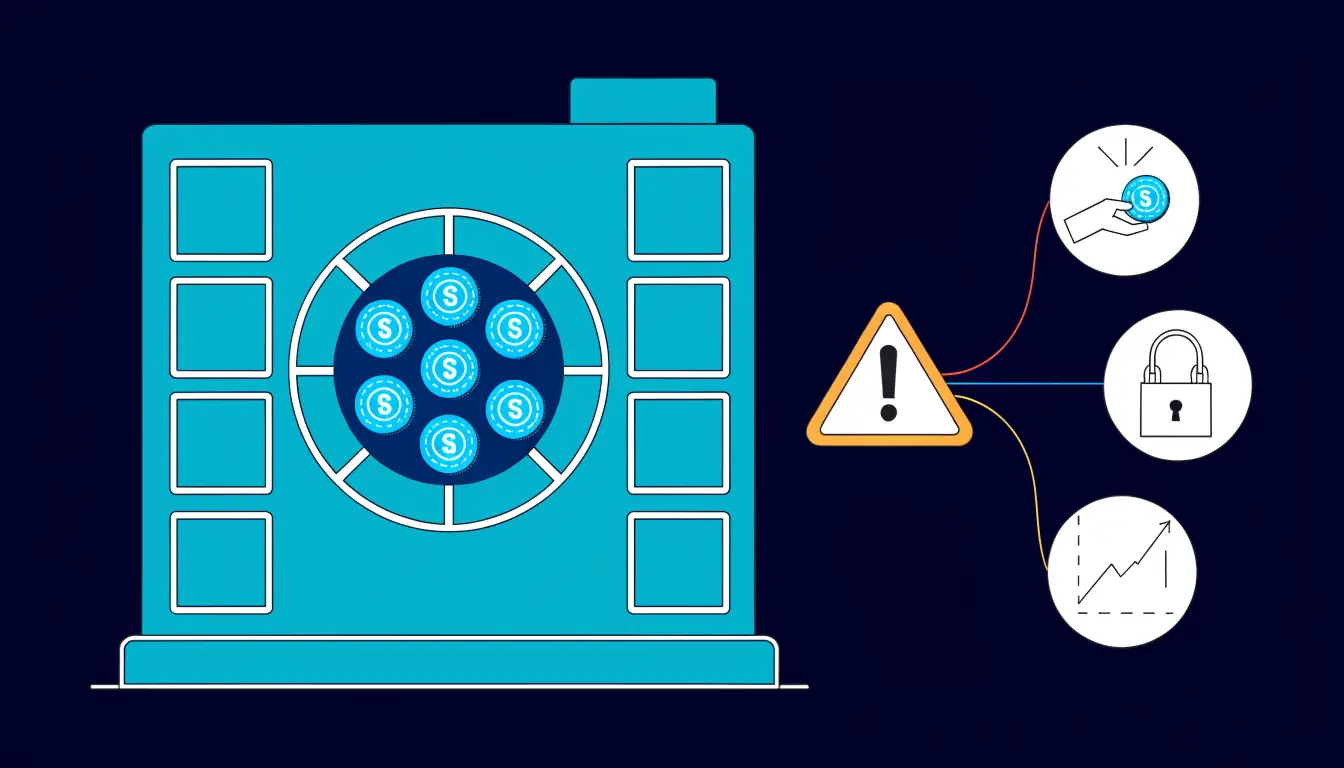
- It usually shows assets, not liabilities. Reserves tell you what an exchange holds. They do not always tell you what it owes elsewhere — loans, debts, or money borrowed against those same coins. An exchange can show a full wallet and still be deep in the red. A complete check is called proof of liabilities, and true solvency needs both sides.
- It is a snapshot in time. Most attestations capture one moment. The coins that were there on Monday can be moved, spent, or lent on Tuesday. A single old snapshot says little about today.
- It can be gamed. An exchange could borrow coins right before a check to top up its wallets, then return them after. Without surprise timing and independent verification, a snapshot can be dressed up.
- It is not the same as a full audit. A limited attestation is narrower than a full financial audit by a major accounting firm. It usually does not review the company's overall finances, internal controls, or hidden risks.
Warning: do not read "proof of reserves" as "this exchange is safe" or "my money is guaranteed." At best it proves assets existed at one moment. It says little about debts, and nothing about what happens tomorrow. Treat it as a partial, positive signal — never a promise.
Why it matters to you
If proof of reserves is so limited, why care at all? Because the alternative — no visibility whatsoever — is worse. Several exchanges have collapsed after quietly using customer funds they claimed to be holding. In that context, an exchange that publishes regular, verifiable reserves is choosing to be more transparent than one that shows nothing.
So proof of reserves is best understood as a transparency signal. An exchange that offers it — especially with independent involvement and frequent updates — is inviting scrutiny. An exchange that refuses to show anything, or is vague about it, is a fair reason for caution.
The healthy approach is to combine PoR with other checks: how the exchange is regulated, its track record, its security history, and whether liabilities are included. For a full method, see our guide on how to verify an exchange is legit and our checklist of what to look for in a safe exchange.
How to check an exchange's proof of reserves
You do not need to be a developer to judge the quality of a proof-of-reserves claim. Work through these questions:
- Is anything actually published? Look for a proof-of-reserves or transparency page with real data — wallet addresses, dates, and totals — not just a marketing paragraph.
- Is a third party involved? Reserves confirmed or reviewed by an independent firm carry more weight than a report the exchange grades itself on.
- Are liabilities included? The strongest disclosures address both assets and liabilities, or explain how customer obligations are counted. If only assets are shown, treat it as half the picture.
- How recent is it? A snapshot from a year ago tells you little. Frequent, regularly updated attestations are far more meaningful than a one-off.
- Can you verify your own balance? Better systems let you use a Merkle proof to confirm your account was included in the total. If that tool exists, it is a good sign — and worth actually using.
Deciding where to open an account in the first place? Our guide on how to choose a crypto exchange walks through these factors alongside fees, features, and availability.
Tips and common mistakes
Helpful tips
- Prefer recent, repeated attestations over a single old one. Consistency over time is more convincing than one good snapshot.
- Value independent involvement. A named third-party firm reviewing the numbers is stronger than a self-published claim.
- Look for liabilities, not just assets. Disclosures that address what the exchange owes are far more useful than wallet balances alone.
- Use the verify tool if offered. If you can check your own balance is included, do it — that is the part built for you.
- Reduce the risk you can control. For coins you are not actively trading, moving them to your own wallet removes the reserve question entirely.
Common mistakes to avoid
- Treating proof of reserves as a full guarantee. It shows assets at a moment, not lasting solvency. This is the single biggest misreading.
- Ignoring liabilities. A full wallet means little if the exchange owes more than it holds.
- Trusting an old snapshot. Reserves can change the day after a check. Dates matter.
- Accepting a self-graded report with no independent review as if it were an audit.
- Assuming "no proof of reserves" always means fraud. It is a reason to ask more questions, not an automatic verdict — but silence should lower your confidence.
Frequently asked questions
What is proof of reserves?
Proof of reserves is a way for a crypto exchange to show it holds enough crypto to cover what its customers are owed. It typically points to real on-chain wallets and lets users check their own balance is included in the total.
Does proof of reserves mean an exchange is safe?
No. It is a helpful transparency signal, not a full guarantee. It usually shows assets at one moment, not liabilities or lasting solvency, and it can be gamed without independent checks. Combine it with regulation, track record, and other safety signals.
What is a Merkle tree proof?
A Merkle tree combines many customer balances into one short "fingerprint." The exchange gives you a private proof so you can confirm your own balance was counted in the total, without seeing anyone else's account. It stops an exchange from quietly leaving deposits out.
Does proof of reserves show debts?
Usually not. Reserves show what an exchange holds, not what it owes in loans or borrowing. Showing debts is called proof of liabilities, and true solvency needs both sides. Assets alone are only half the picture.
How do I check an exchange's reserves?
Look for a published proof-of-reserves or transparency page with wallet data and dates, check whether an independent third party is involved, see if liabilities are included, note how recent the attestation is, and use any tool that lets you verify your own balance.
Summary
Proof of reserves lets an exchange show it holds the crypto it claims, usually through on-chain wallet proof, Merkle-tree balance checks, and independent review. It is a real step toward transparency and a fair way to compare exchanges. But it usually shows assets and not liabilities, it is only a snapshot, and it can be gamed — so it is helpful, not a full guarantee of solvency. Read it as one signal among several, and give the most weight to recent, independently reviewed disclosures that include what the exchange owes.
Next step: put this into practice with our full checklist on how to verify an exchange is legit.