Centralized Exchange Risks You Should Know

Key takeaways
- A centralized exchange (CEX) is a company that buys, sells, and stores crypto for you. It is convenient, but you are trusting a business with your money.
- When you keep coins on an exchange, the exchange holds your keys — so it, not you, controls the funds.
- This is where the saying "not your keys, not your coins" comes from. If you do not hold the keys, the crypto is not fully under your control.
- Real risks include hacks, company failure, frozen withdrawals, and locked accounts. These are rare on strong platforms but they do happen.
- Don't keep everything on one exchange. Use strong security, hold only what you need, and move long-term savings to a wallet you control.
Most people buy their first crypto on a centralized exchange — a company like a large trading platform that lets you swap money for coins and stores them for you. These platforms are easy to use, and for good reason: they handle the hard parts so you do not have to. But that convenience comes with a trade-off. When your crypto sits on an exchange, the company holds it — and that means you are trusting them to stay secure, stay solvent, and let you withdraw when you ask.
This guide explains the honest risks of keeping crypto on a centralized exchange, in plain English. Exchanges are useful tools, and this is not a reason to avoid them. It is a reason to understand what you are trusting and how to keep your exposure sensible.
Who this guide is for:
- Beginners who just bought crypto and left it "on the exchange."
- Anyone who keeps hearing "not your keys, not your coins" and wants to know what it means.
- People who want a calm, balanced view of the risks — not fear, and not blind trust.
Not sure which platform to use in the first place? Start with our guide to how to choose a crypto exchange, then come back here to understand the risks.
Why centralized exchanges carry risk
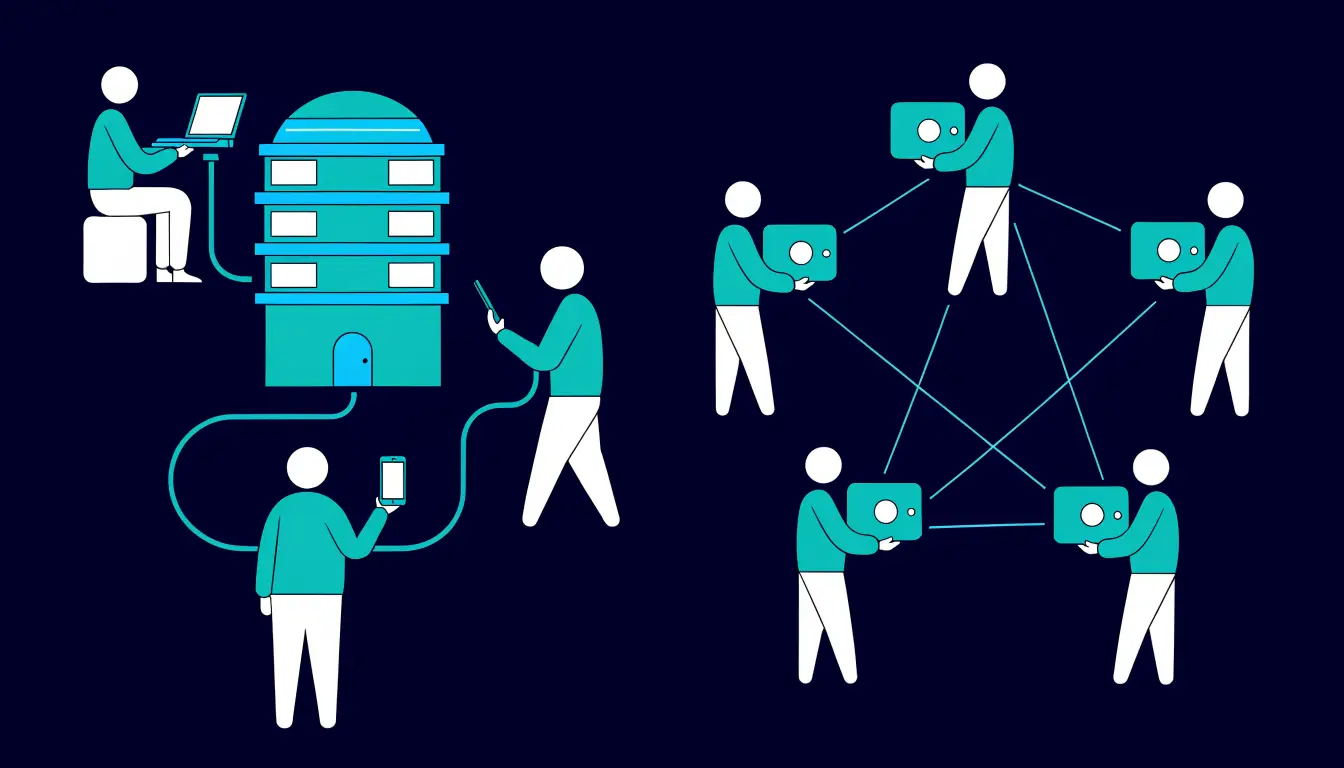
A centralized exchange carries risk for one main reason: it is custodial. That means the company holds your funds and your private keys for you. A private key is the secret code that controls crypto. Whoever holds the key controls the coins. On a centralized exchange, the exchange holds that key — so, in practice, the exchange controls your crypto, and you hold a promise that you can withdraw it.
Most of the time that promise is kept, and reputable exchanges work exactly as expected. But it does mean your crypto is only as safe as the company itself. If the business is hacked, badly run, or forced to stop by a regulator, your access can be affected — even if you did nothing wrong.
This is the key difference between holding crypto on an exchange and holding it in your own wallet. For a fuller explanation of the two models, see our guide to custodial vs non-custodial wallets.
Simple analogy: keeping crypto on an exchange is like keeping cash in a bank. It is convenient and usually safe — but you are trusting the institution, and you do not physically hold the money yourself.
The main risks
Here are the real risks of leaving crypto on a centralized exchange. Each one is uncommon on a strong, well-run platform — but none of them is impossible, and history shows they do occur.

- Hacks and security breaches. Exchanges hold huge amounts of crypto, which makes them a target. A successful attack can drain customer funds.
- Insolvency or failure. An exchange is a business. If it runs out of money or collapses, customers can lose access to their funds. The industry has seen large exchanges fail in the past.
- Withdrawal freezes. A platform may pause withdrawals during heavy trading, technical problems, or financial trouble. You may be unable to move your crypto exactly when you want to.
- Account lockouts. You can lose access to your own account through a forgotten password, a failed identity check, or a security flag — sometimes for days.
- Mismanagement of funds. Because the exchange controls the assets, poor internal controls or dishonest management can put customer money at risk behind the scenes.
- Regulatory action. Rules differ by country. An exchange can be restricted, fined, or forced to stop serving your region, which can affect your access.
- Downtime during volatility. When prices move fast, platforms can slow down or go offline — right when you most want to trade or withdraw.
Warning: "It has never happened to a big exchange" is not a guarantee. Several large, popular platforms have failed or frozen withdrawals in the past, and customers were affected. Treat any single exchange as a place to trade, not a vault for your life savings.
"Not your keys, not your coins"
"Not your keys, not your coins" is one of the most repeated phrases in crypto — and it captures the core risk in five words. It means that if you do not hold the private keys to your crypto, you do not fully control it. Someone else does.
On a centralized exchange, the exchange holds the keys. So when you "own" crypto on a platform, what you really own is a claim against that company — a promise that it will give you your coins when you ask. In normal times, that promise is honored instantly. But if the exchange is hacked, fails, or freezes withdrawals, that promise is only as strong as the company behind it.

Holding your own keys means using a wallet you control, where only you have the secret backup (the seed phrase). That shifts control to you — along with the responsibility to keep it safe. To understand where crypto can live and how safe each option is, see our guide to hot vs cold wallets.
How to reduce your exposure
You do not have to avoid exchanges to stay sensible. The goal is simply to limit how much you are trusting any one company. A few habits go a long way:
- Use reputable, established exchanges. Favor platforms with a long track record, strong security, and clear rules. Our guide to what to look for in a safe exchange covers the signs to check.
- Turn on strong security. Enable two-factor authentication (2FA) and use a unique, strong password. This protects your account even if your password leaks.
- Don't store more than you need. Keep only what you are actively trading or spending on the exchange. The rest does not need to sit there.
- Move long-term holdings to self-custody. For coins you plan to hold for the long term, move them to a wallet you control. See how to move crypto from an exchange to a wallet.
- Spread across platforms. If you keep a larger balance on exchanges, splitting it across more than one reduces the impact if any single platform has a problem.
None of these steps is complicated, and together they turn a large, single point of failure into a much smaller one.
When keeping crypto on an exchange is reasonable
Keeping crypto on an exchange is not always the wrong choice. For many everyday situations it is perfectly reasonable — as long as you go in with your eyes open. It often makes sense when:
- The amount is small. If you hold a modest amount you are comfortable putting at some risk, the convenience can be worth it.
- You trade actively. If you buy and sell often, your crypto needs to be on the platform to move quickly. Constantly withdrawing and depositing is slow and costly.
- You value convenience. Exchanges handle backups, recovery, and security for you. For some beginners, that is safer than managing their own keys before they are ready.
The honest point is not "never use an exchange." It is "know what you are trusting." Use the platform for what it is good at, and move savings you cannot afford to lose into your own control.
Tips and common mistakes
Helpful tips
- Turn on 2FA today. An app-based code is far stronger than SMS. Do this before anything else — see how to set up 2FA.
- Withdraw what you are not using. Practice moving a small amount to your own wallet so the process feels familiar before you move a larger sum.
- Keep your email secure. Your email often controls password resets. Protect it with its own strong password and 2FA.
- Check the rules where you live. Know whether a platform is available and permitted in your country before relying on it.
Common mistakes to avoid
- Keeping everything on one exchange long-term, as if it were a bank vault. It is a business, not a guaranteed store of value.
- Assuming "too big to fail." Size and popularity are not proof of safety. Large platforms have failed before.
- Skipping 2FA because it feels like a hassle. A single leaked password should never be enough to drain your account.
- Chasing the highest reward. An exchange offering unusually high returns to hold your coins may be taking risks with them. If it seems too good to be true, it usually is.
Frequently asked questions
What are the risks of a centralized exchange?
The main risks are hacks, company failure or insolvency, frozen withdrawals, account lockouts, mismanagement of customer funds, regulatory action, and downtime during busy periods. Each is uncommon on a strong platform, but none is impossible.
Is my crypto safe on an exchange?
On a reputable, well-run exchange it is usually fine for everyday use. But "usually fine" is not the same as guaranteed. Because the exchange holds your keys, your crypto is only as safe as the company. For long-term savings, holding your own keys is safer.
What does "not your keys, not your coins" mean?
It means that if you do not hold the private keys to your crypto, you do not fully control it. On an exchange, the company holds the keys, so you own a claim against that company rather than direct control of the coins.
Can an exchange freeze my funds?
Yes. A platform can pause withdrawals during technical problems, heavy trading, financial trouble, or a regulatory issue. Your account can also be locked over a security flag or failed identity check. This is why keeping everything on one exchange carries risk.
Should I move crypto off the exchange?
For coins you plan to hold long-term, moving them to a wallet you control reduces your exposure to any single company. For small amounts or active trading, keeping some on the exchange is reasonable. Many people do both.
Summary
Centralized exchanges are useful and convenient, but they are custodial — the company holds your funds and your keys. That is the source of the real risks: hacks, failure, frozen withdrawals, and lockouts. The saying "not your keys, not your coins" is a reminder that crypto on an exchange is a promise, not full ownership. Use strong security, hold only what you need, spread larger balances, and move long-term savings into your own control.
Next step: ready to take control of your own keys? Learn where crypto can safely live in our guide to hot vs cold wallets.