What Happens If You Lose Your Wallet Keys?

Key takeaways
- Your wallet keys are what prove you own your crypto. Your seed phrase is the master backup of those keys.
- With a non-custodial wallet, losing both your device access and your seed phrase usually means permanent loss — no one can reset it for you.
- If you still have access to the wallet on your device, you can move your funds to a new wallet and re-secure them right away.
- With a custodial (exchange) account, the company holds the keys, so it can often help you recover access through a password reset or identity check.
- Be very careful with anyone who promises to "recover" lost self-custody crypto — most of these are scams.
Losing access to your crypto is one of the scariest moments for any beginner. The honest truth is that it depends entirely on where your crypto is stored and what you have lost. In some cases you can recover easily. In others, the money may be gone for good.
This guide explains, in plain English, what actually happens when you lose your wallet keys or seed phrase. It covers the difference between self-custody and exchange accounts, when recovery is realistic, and how to protect your access so you are never in this position. If wallets are new to you, start with our guide to what a crypto wallet is, then come back here.
Who this guide is for:
- Beginners who just set up a wallet and want to know the risks.
- Anyone who has misplaced a seed phrase, device, or password and is worried.
- People who want to understand recovery before something goes wrong.
First, what are "wallet keys"?
A crypto wallet does not actually hold your coins the way a physical wallet holds cash. Your coins live on the blockchain. What your wallet really holds are your keys — the secret codes that prove the coins are yours and let you move them.
There are two things to understand:
- A private key is the secret code that controls a specific wallet address. Whoever has it can spend the crypto at that address.
- A seed phrase (also called a recovery phrase) is a list of 12 or 24 simple words that acts as the master backup of all your keys. From the seed phrase, your wallet can rebuild every private key it manages.
In other words, the seed phrase is the real key to your crypto. If you have it, you can restore your wallet on any compatible app or device. If you lose it — and you also lose access to the wallet itself — there is usually no way back. For a full breakdown, see our guide to what a seed phrase is.
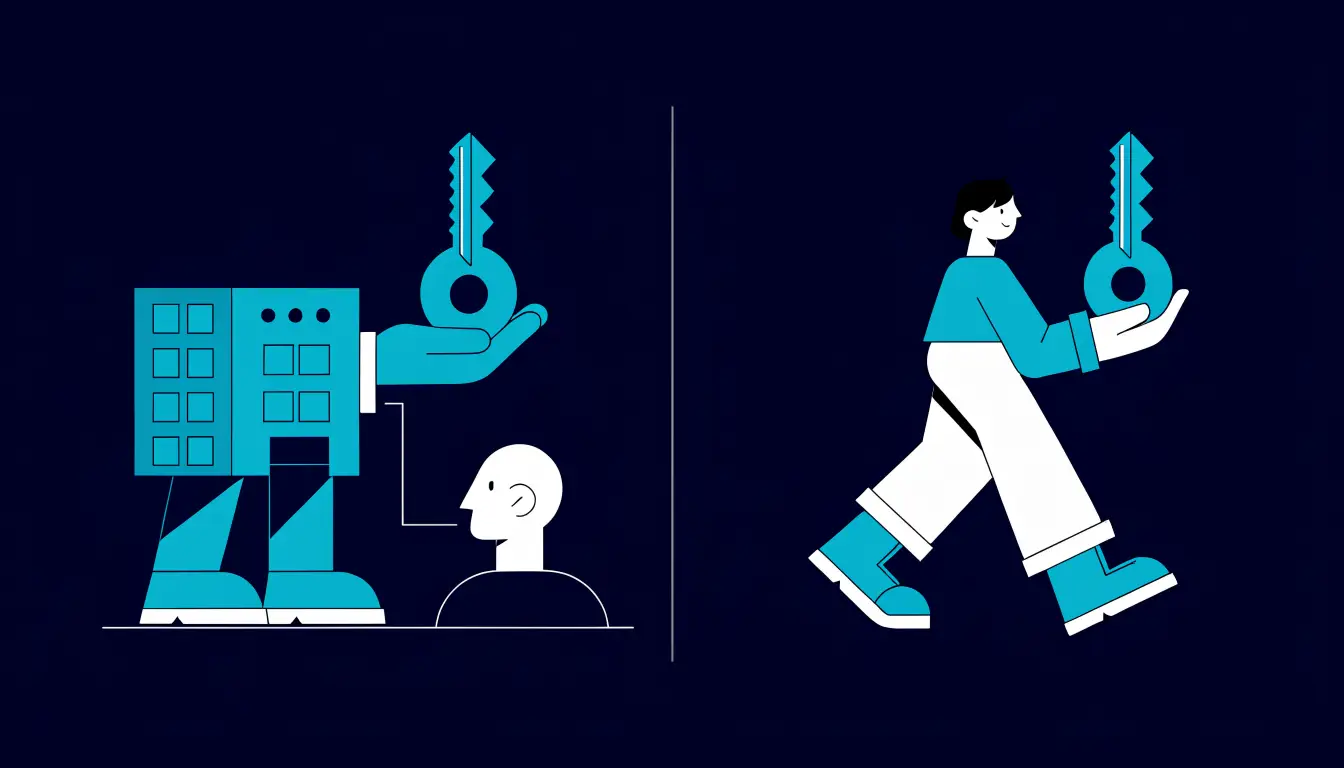
Simple analogy: think of the seed phrase as the master key to a safe. The safe (the blockchain) still exists, but without the key you cannot open it — and no locksmith can cut you a new one.
What happens if you lose your seed phrase (non-custodial wallet)?
This is the situation people worry about most. A non-custodial wallet is one where you hold the keys — no company has a copy. That gives you full control, but it also means the responsibility for backup is entirely yours. What happens next depends on whether you can still open the wallet.

If you still have access to the wallet on your device: you are in luck, but you should act quickly. As long as the app is unlocked and working, you can still move your crypto. The safest response is to create a brand-new wallet (with a fresh seed phrase you write down carefully), then send all your funds to it. Once that is done, your old, backup-less wallet no longer matters.
If you lose access to the device too: this is where the trouble starts. If your phone breaks, is lost or wiped, or the app is deleted — and you never saved the seed phrase — there is no reset button. No company can verify your identity and let you back in, because with a non-custodial wallet no company holds your keys. In most cases, the funds are permanently unrecoverable.
This is the trade-off of self-custody: total control comes with total responsibility. To understand which kind of wallet you have, read custodial vs non-custodial wallets.
What happens if you lose access to a custodial (exchange) account?
The picture is very different for a custodial account — for example, the balance held in your account on a major exchange such as Bitget, Coinbase, or Binance. Here the company holds the keys on your behalf, much like a bank holds your money. Because they control the keys, they can help you get back in.
If you forget your password, you normally just use the "forgot password" link and reset it by email. If you lose access to your email or two-factor codes as well, the exchange usually has an account recovery process. This often means verifying your identity — confirming personal details, answering security questions, or submitting ID documents — before they restore access.
So losing your login to an exchange is rarely permanent. The keys still exist; you are simply proving to the company that the account is yours. The trade-off is that you are trusting that company to stay secure and solvent — which is the core reason many people eventually move long-term savings to self-custody. See hot vs cold wallets for how those choices fit together.
Can lost crypto ever be recovered?
The honest answer is: sometimes, but often not. It depends on what you lost.

- Custodial (exchange) account: recovery is usually possible through the company's password reset or identity checks.
- Non-custodial wallet, seed phrase saved: recovery is straightforward — restore the wallet from your seed phrase on any compatible app or device.
- Non-custodial wallet, seed phrase and access both lost: recovery is realistically not possible. The keys are gone, and no service can rebuild them.
Estimates suggest a large share of all Bitcoin — often cited as millions of coins — is already lost forever this way, sitting at addresses whose owners can no longer prove ownership. That is a stark reminder that self-custody backups matter more than almost anything else you do.
Warning — fake fund-recovery scams: after a loss, people often search for help online and find "crypto recovery services" that promise to get lost funds back for a fee. For genuinely lost self-custody keys, this is technically impossible — so these offers are almost always scams designed to take a second payment from someone already hurting. Never pay an upfront fee or share your seed phrase with a "recovery expert." Learn the patterns in our guide to common crypto scams.
How to protect your access (prevention)
Because self-custody loss is often permanent, prevention is everything. A few simple habits remove almost all of the risk:
- Write down your seed phrase offline the moment you set up a wallet — never as a photo, screenshot, note, or cloud file.
- Keep more than one backup in separate safe places. One copy can be lost, damaged, or stolen; two copies in different locations protect against fire, flood, or theft.
- Consider a metal backup. Stamping or engraving your words onto a metal plate protects them from water and fire in a way paper cannot.
- Test your recovery once. Restore the wallet from your written phrase (or move a tiny amount to a freshly restored wallet) so you know your backup actually works.
- Turn on 2FA for custodial accounts. Two-factor authentication protects your exchange login even if your password leaks — see how to set up 2FA.
Do these once, and the nightmare scenario in this guide simply cannot happen to you.
Tips and common mistakes
Helpful tips
- Back up before you deposit. Save and verify your seed phrase before sending any crypto to a new wallet.
- Store copies apart. Keep backups in two different physical locations, not side by side.
- Keep custodial and self-custody separate in your mind. Know which of your holdings a company can help recover and which only you can.
- Tell a trusted person where a backup is (not the words themselves) so funds are not lost if something happens to you.
Common mistakes to avoid
- Storing your seed phrase digitally — in a photo, email, or cloud drive — where hackers or a device failure can reach it.
- Keeping only one copy of your seed phrase, so a single accident wipes out your access.
- Assuming someone can reset a non-custodial wallet. No support team exists for a wallet only you control.
- Trusting "recovery services" that promise to restore lost self-custody funds for a fee.
Frequently asked questions
Can I recover crypto without my seed phrase?
If you still have access to the wallet on your device, yes — you can move the funds to a new, properly backed-up wallet. But if you have lost both the seed phrase and access to the wallet, self-custody crypto usually cannot be recovered by anyone.
Can an exchange recover my account?
Usually, yes. Because a custodial exchange holds the keys for you, it can reset your password or restore access after an identity check. This is the main practical difference from a non-custodial wallet.
Are crypto recovery services legit?
Almost never for lost self-custody keys. If the keys are truly gone, no service can rebuild them, so offers to do so for an upfront fee are typically scams. Never pay in advance or share your seed phrase with anyone claiming they can recover funds.
What if I forget my wallet password but have the seed phrase?
You are fine. A wallet app password only unlocks that app on that device. With your seed phrase, you can reinstall the app or use another compatible wallet and restore full access.
Does anyone hold a backup of my keys?
With a non-custodial wallet, no — only you hold the keys, and no copy exists anywhere else. With a custodial exchange account, the company holds the keys, which is why it can help you recover access.
Summary
What happens when you lose your wallet keys depends on where your crypto lives. With a custodial exchange account, the company can usually restore access. With a non-custodial wallet, losing both your device access and your seed phrase almost always means the funds are gone for good — and no legitimate service can bring them back. The good news is that a few simple backup habits remove this risk entirely.
Next step: make sure your master backup is safe. Read our guide to what a seed phrase is and set up your backups the right way.