Common Crypto Scams and How to Avoid Them (2026)

Key takeaways
- Crypto scams work because payments are irreversible — once you send coins, no bank can claw them back.
- Most scams are variations of a few types: phishing, fake apps, fake giveaways, rug pulls, romance scams, fake investment platforms, fake "support", and SIM-swaps.
- Nearly all of them share the same red flags: guaranteed profits, urgency, pressure, and a request for your seed phrase or keys.
- No one legitimate will ever ask for your seed phrase or private key. Anyone who does is a scammer — full stop.
Crypto opens up fast, borderless payments — but that same speed makes it a magnet for scammers. The good news: almost every scam follows a pattern. Once you can spot the pattern, you can protect yourself.
This guide walks through the most common crypto scams in plain English, the red flags that give them away, and the simple habits that keep your money safe. It's written for total beginners, and it's exchange-neutral — the advice works no matter where you buy or store crypto.
Who this guide is for:
- Complete beginners who just bought their first crypto.
- Anyone who has been sent a "too good to be true" crypto offer.
- People who want a simple checklist for staying safe.
Why crypto scams are so common
Three features of crypto make it attractive to scammers. Understanding them explains almost every trick you'll see.
- Transfers are irreversible. With a card payment or bank transfer, you can often dispute a charge and get your money back. A crypto transaction is final — once it's sent, it's gone. Scammers love that there's no "undo" button.
- It can be anonymous. A wallet address doesn't have your name on it. Criminals can receive funds and move them across the world without an obvious identity attached, which makes them hard to trace and catch.
- Hype creates fear of missing out. Stories of people getting rich fast push beginners to act quickly and skip their usual caution. Scammers manufacture that same urgency on purpose.
Put simply: crypto lets a stranger take your money instantly, keep it, and disappear. That's why learning the warning signs matters so much.
The most common crypto scams
Here are the scam types you're most likely to meet. Different names, same goal: get you to send crypto or hand over your keys.
Phishing (fake sites and emails)
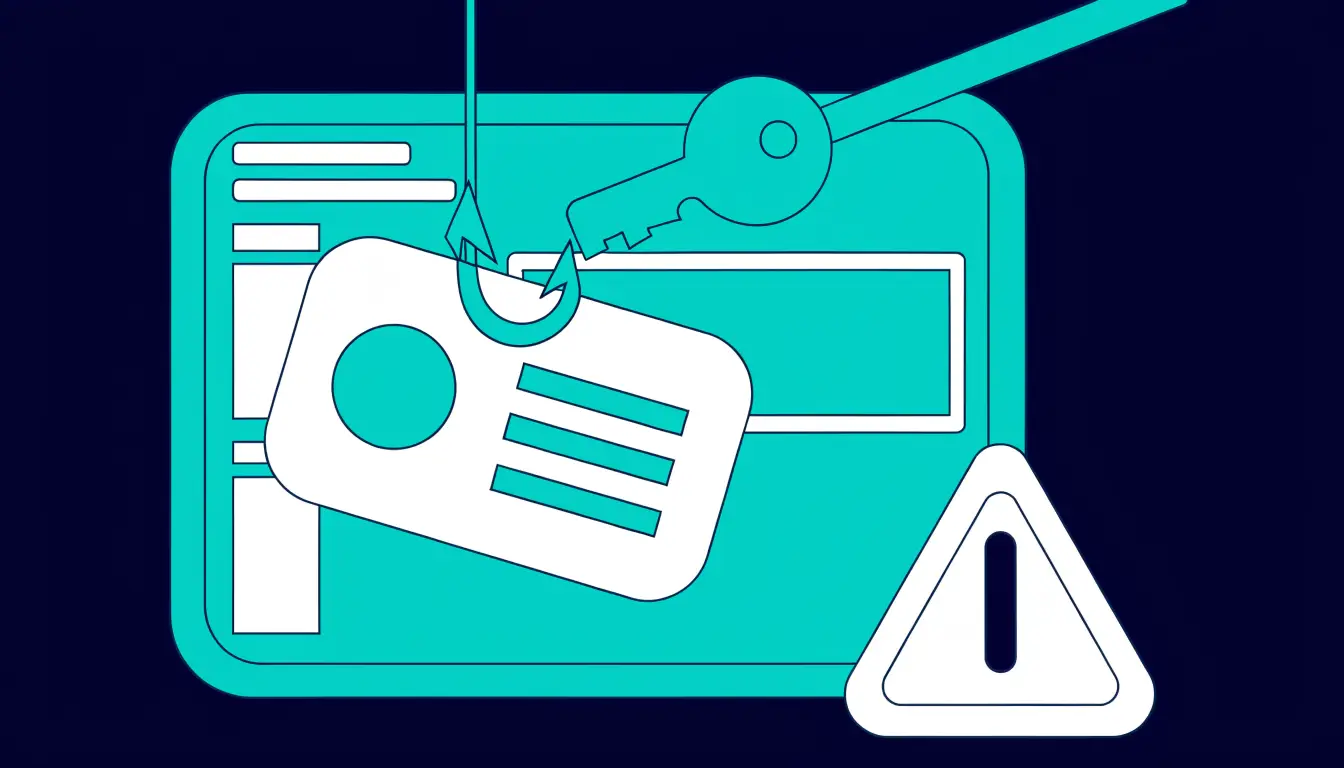
Phishing is when a scammer copies a real website, email, or message to trick you into entering your login or seed phrase. A fake page might look exactly like your exchange or wallet, but the web address is slightly off. When you "log in", you're really handing your details to a thief. Learn the details in our guide on how to spot crypto phishing.
Fake apps and fake wallets
Scammers publish counterfeit wallet or exchange apps in app stores, or promote them through ads and links. The app looks real, but it either steals your seed phrase the moment you enter it or shows a fake balance to keep you "topping up". Only download from a provider's official website or verified app-store listing.
Giveaway and impersonation scams
A post or video (often impersonating a celebrity, company, or founder) promises to "double your coins" — send 1 coin, get 2 back. It's always a lie. No legitimate giveaway ever asks you to send crypto first. These spread fast on social media and fake livestreams.
Rug pulls and fake tokens
A rug pull is when the creators of a new token hype it up, take in buyers' money, then vanish — draining the funds and leaving the token worthless. Fake tokens copy the name of a popular project to fool buyers. See our full explainer on what is a rug pull.
Romance and "pig butchering" scams
A stranger builds a friendship or romance with you online over weeks, then slowly introduces a "great" crypto investment. The name "pig butchering" refers to fattening up the victim with trust before the final theft. The platform they point you to is fake — the profits you "see" aren't real, and any money you deposit is gone.
Fake investment platforms and Ponzi / HYIP schemes
These sites promise fixed, high daily or weekly returns. A Ponzi scheme pays early users with money from newer users — not from real profit — until it collapses. A HYIP ("high-yield investment program") is the same idea dressed up with a slick website. Real investing never guarantees returns.
Fake customer support and seed-phrase requests
Scammers pose as support staff — in chat groups, in your social media replies, or over the phone — and offer to "help" fix an issue. To do it, they ask for your seed phrase, password, or remote access to your device. Real support never needs your seed phrase or private key.
SIM-swap attacks
In a SIM-swap, a criminal tricks your phone company into moving your number to their SIM card. They then receive your text-message security codes and try to break into your accounts. This is why app-based two-factor authentication is safer than SMS — more on that below and in how to set up 2FA.
| Scam | How it hooks you | Fastest way to spot it |
|---|---|---|
| Phishing | Fake login page or email | Check the exact web address; don't click links in messages |
| Fake app/wallet | Counterfeit app or download link | Only install from the official site or verified store listing |
| Giveaway | "Send coins, get more back" | Legit giveaways never ask you to send first |
| Rug pull / fake token | Hyped new token, then vanish | Anonymous team, no real product, huge promises |
| Romance / pig butchering | Online friend pushes an "investment" | New contact + crypto tip = walk away |
| Ponzi / HYIP | Guaranteed fixed returns | No real investment guarantees profit |
| Fake support | "Helper" asks for your keys | Nobody legit needs your seed phrase |
| SIM-swap | Your number is hijacked | Use app-based 2FA, not SMS |
Universal red flags
You don't need to memorise every scam. Instead, memorise the warning signs they share. If you spot even one of these, stop and slow down.

- Guaranteed or "risk-free" returns. All investing carries risk. A promise of guaranteed profit is a promise of a scam.
- Urgency and pressure. "Act now", "offer ends today", "only a few spots left." Rushing you is the point — it stops you checking.
- Unexpected direct messages (DMs). A stranger sliding into your messages with a crypto tip, job, or "support" offer is almost always a scam.
- Anyone asking for your seed phrase, private key, or password. This is the biggest red flag of all. There is no legitimate reason for it, ever.
- Requests to "send first". Sending crypto to unlock a bigger reward, a withdrawal, or a "verification" is always a trap.
- Payment only in crypto, to a personal wallet. Especially when combined with secrecy or a story about why it must be fast.
- Too-perfect screenshots and testimonials. Fake profit charts and glowing reviews are cheap to fake.
- Slightly wrong details. Odd web addresses, spelling errors, or a "team" that hides its identity.
How to protect yourself
A few simple habits stop the large majority of scams. Build these into your routine.

- Turn on two-factor authentication (2FA). Use an authenticator app rather than SMS where possible, so a SIM-swap can't hijack your codes. See how to set up 2FA.
- Use official links only. Type your exchange or wallet address yourself, or use a saved bookmark. Don't click links in emails, DMs, or ads.
- Never share your seed phrase or private key. Not with "support", not with a friend, not with a website. Store your seed phrase offline on paper.
- Use a hardware wallet for larger amounts. A hardware (cold) wallet keeps your keys offline, out of reach of most online attacks. New to wallets? Start with what is a crypto wallet.
- Verify before you act. Check web addresses letter by letter, confirm token contracts from official sources, and be suspicious of anything unsolicited.
- Slow down. Scammers rely on speed. Sleeping on a decision costs you nothing and defeats most scams.
For a deeper walkthrough of locking down your accounts and devices, read how to protect crypto from hackers.
Tip: Before sending crypto anywhere new, send a tiny test amount first and confirm it arrives. It costs a little in fees, but it catches wrong addresses and fake platforms early.
What to do if you have been scammed
If you think you've been caught, act quickly and calmly. You may not recover funds — crypto transfers are usually final — but fast action can limit further damage and help others.
- Stop all contact and payments. Don't send "one more" payment to release funds — that's part of the scam. Cut off the scammer immediately.
- Secure your accounts. Change passwords, turn on or reset 2FA, and if any wallet may be compromised, move remaining funds to a brand-new wallet with a fresh seed phrase.
- Disconnect and scan your devices. If you installed anything or gave remote access, disconnect from the internet and run a security scan before logging back in.
- Gather evidence. Save messages, web addresses, wallet addresses, transaction IDs, and screenshots. These help investigators and warn others.
- Report it. Contact your exchange or wallet provider's support, and report to your national consumer-protection or fraud authority (for example, the US FTC at reportfraud.ftc.gov). Reporting helps track scammers even when recovery isn't possible.
- Beware "recovery" scams. After a loss, fake "fund recovery" services often appear promising to get your money back for a fee. They are a second scam. Never pay upfront to recover lost crypto.
One habit that beats most scams: when anything feels urgent or too good to be true, pause and verify through an official channel you found yourself. Real opportunities survive a 24-hour wait; scams don't.
Common mistakes to avoid
These are the slips that catch beginners most often:
- Clicking links in messages or ads instead of typing the address yourself.
- Trusting a stranger's investment tip from a DM, group chat, or new online friend.
- Entering your seed phrase into a website or app to "verify", "sync", or "unlock" anything.
- Chasing guaranteed returns and ignoring the guarantee itself as the warning sign.
- Using SMS-only 2FA, which is vulnerable to SIM-swap attacks.
- Paying a "recovery service" after a loss — that's a second scam.
Warning: No one legitimate — no exchange, wallet, support agent, government, or "helper" — will ever ask for your seed phrase or private key. Anyone who does is a scammer. Stop, don't share anything, and walk away.
Frequently asked questions
Can I get my crypto back after a scam?
Usually not, because crypto transfers are final and can't be reversed like a card payment. Still, report it right away — your exchange and fraud authorities may be able to help, and reporting helps stop the scammer targeting others.
Why do scammers ask for my seed phrase?
Your seed phrase is the master key to your wallet. Anyone who has it can take everything instantly. That's why no legitimate service ever needs it — only a thief does.
Is a "double your crypto" giveaway ever real?
No. Any offer that asks you to send crypto first to receive more back is a scam, no matter whose name or logo is attached to it.
How can I tell if a crypto website is fake?
Check the exact web address for misspellings or extra words, avoid links from messages and ads, and be wary of guaranteed returns, urgency, and hidden team identities. When in doubt, leave and reach the site through a link you found yourself.
What's the single best way to stay safe?
Slow down and verify. Turn on app-based 2FA, never share your seed phrase, use official links only, and treat any urgent or guaranteed-profit offer as a scam until proven otherwise.
Summary
Crypto scams thrive because transfers are irreversible, wallets can be anonymous, and hype makes people rush. But nearly every scam waves the same red flags: guaranteed returns, urgency, unexpected messages, and requests for your seed phrase. Turn on 2FA, use official links only, keep larger amounts in a hardware wallet, never share your keys, and slow down before you act. Those few habits stop the vast majority of scams.
Next step: learn to recognise the most common attack of all in our guide to how to spot crypto phishing, then lock down your accounts with how to protect crypto from hackers.