How to withdraw Bitget? Introducing withdrawal fees and limits!

Can I withdraw cash from Bitget?
Bitget does not support fiat withdrawals in any currency, so funds must be withdrawn as cryptocurrency.
With cryptocurrency withdrawals, you may lose valuable funds if you mistake entering the withdrawal address or memo/tag or if you make a mistake in selecting the network.
Therefore, it is essential to be careful when withdrawing money.
Therefore, I will explain the withdrawal procedure and precautions this time, including Bitget's withdrawal rules.
After reading this article, you can withdraw correctly and safely with Bitget! Roughly speaking
- Only virtual currencies can be withdrawn with Bitget
- You can withdraw any brand in any currency you handle
- Withdrawal fees and minimum withdrawals vary by currency
- The daily and one-time work limit varies depending on the presence or absence of identity verification.
- Note/tag may be required depending on the currency
Bitget withdrawal rules
To make a safe withdrawal with Bitget, it is essential to understand the withdrawal rules.
You should know the following points before withdrawing with Bitget, so check them carefully.
The currency that can be withdrawn
Bitget does not support fiat withdrawals. To turn crypto into cash you withdraw to a wallet or an exchange that supports your local currency, and cash out there.
Therefore, you can withdraw only virtual currencies, and you can withdraw any brand as long as it is handled.
Withdrawal fee and minimum withdrawal amount
- There is a withdrawal fee when you withdraw from Bitget.
- Withdrawal fees vary by currency, so checking in advance is good
- Also, please note that there is a minimum withdrawal amount for each currency.
- Below are the withdrawal fees and minimum withdrawals for major currencies.
| currency | Withdrawal fee | Minimum withdrawal amount |
| BTC | BTC: 0.0006 BTC BEP20 (BSC): 0.00005 BTC | BTC: 0.001 BTC BEP20 (BSC): 0.001 BTC |
| USDT | TRC20: 1 USDT ERC20: 25 USDT BEP20 (BSC): 0.8 USDT HECO: 0.5 USDT OMNI: 15 USDT | TRC20: 2 USDT ERC20: 2 USDT BEP20 (BSC): 10 USDT HECO: 5 USDT OMNI: 100 USDT |
| ETH | 0.006 ETH | 0.01 ETH |
| LTC | 0.001 LTC | 0.1 LTC |
| BCH | 0.0001 BCH | 0.01 BCH |
| XRP | 0.1 XRP | 20 XRP |
How To Withdraw Bitget?

Bitget's withdrawal procedure is so simple that you can operate it without hesitation, even for the first time.
However, be aware that if you make a mistake selecting the chain to use or forget to enter the tag number, you are more likely to lose your valuable funds.
STEP.1
Display of withdrawal screen
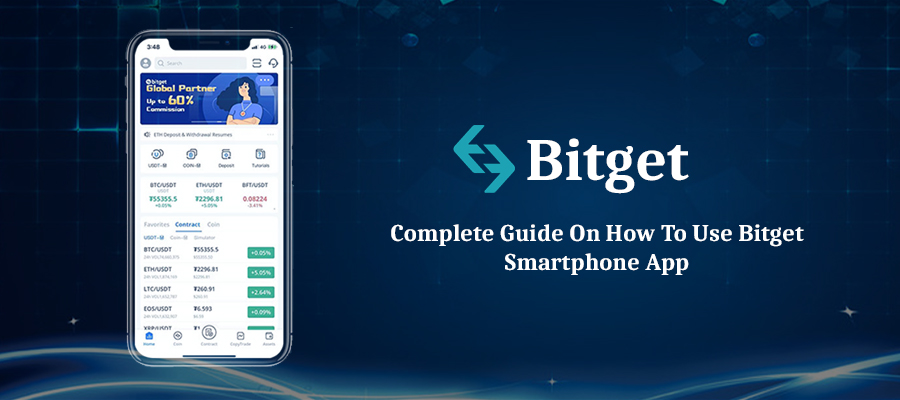
Click "Assets" at the top right of the screen and select "Withdrawal" from the menu that appears.
STEP.2
Enter withdrawal address
Select and enter the currency to withdraw, the chain, the withdrawal address, and the amount to withdraw, and if there are no mistakes in the contents, click "Send".
Precautions When Withdrawing From Bitget
When making a withdrawal with Bitget, you need to pay attention to the following two points. important point
- There are withdrawal restrictions
- It is necessary to enter a memo tag depending on the currency
Note 1. There are withdrawal restrictions
You must verify your identity (KYC) before you can withdraw. Bitget made KYC mandatory for all users on 1 September 2023, and since 20 July 2024 accounts that have not completed at least Level 1 verification cannot withdraw, deposit, or trade — including on-chain withdrawals and internal transfers.
Once you are verified, your daily withdrawal limit depends on your verification level (Level 1 Basic or Level 2 Advanced) and your account type. Higher verification levels unlock higher limits.
Bitget adjusts these limits over time, so we don't publish fixed figures here. Check your current limit on your Bitget account page, or on Bitget's official help center, before planning a large withdrawal.
Note 2. It is necessary to enter a memo tag depending on the currency.
When withdrawing virtual currency, you will need to enter a memo tag depending on the currency.
A memo tag is like a marker that proves that you have your own money.
If you forget to enter the memo tag, the withdrawal may be delayed, or you may lose your funds in the worst case, so be sure to enter it.
The following two currencies require memo tags in the currencies handled by Bitget. XRP / EOS
Bitget Withdrawal Method Summary
Only cryptocurrency can be withdrawn from Bitget, and any coin the exchange supports can be withdrawn.
However, there is a withdrawal fee, and there is also a minimum withdrawal amount, so be sure to check both in advance. Withdrawal fees are based on the network you choose and change with blockchain conditions.
Identity verification (KYC) is required before you can withdraw at all. Your maximum daily withdrawal amount then depends on your verification level, and Bitget updates these limits from time to time — check the current figure in your account before a large withdrawal.
To avoid losing your valuable assets, be careful not to make a mistake in entering the withdrawal address/memo or make a mistake in selecting the network, and make sure to check carefully before making a withdrawal.
Bitget withdrawal method review
- Only virtual currencies can be withdrawn with Bitget
- You can withdraw any brand in any currency you handle
- Withdrawal fees and minimum withdrawals vary by currency
- The daily and one-time work limit varies depending on the presence or absence of identity verification.
- Note/tag may be required depending on the currency.