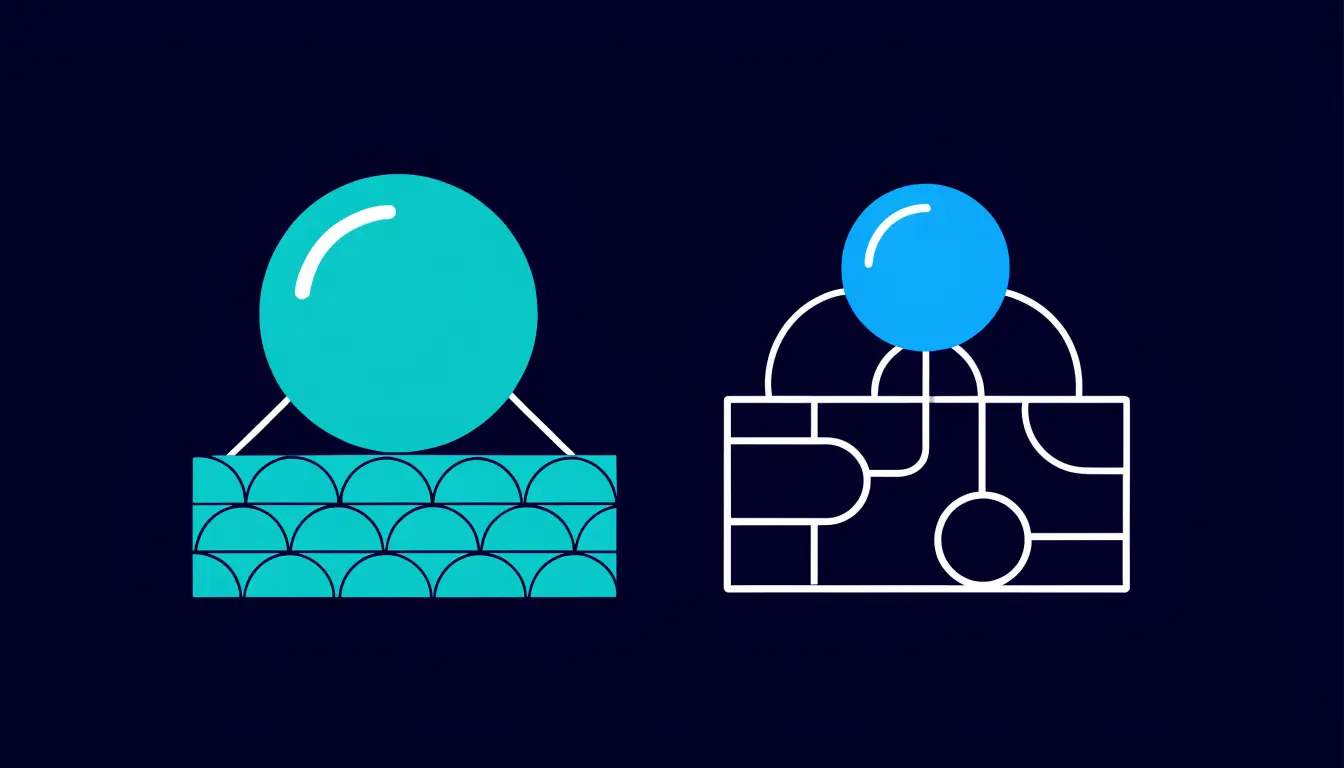
How Are New Cryptocurrencies Created? Mining vs Staking

Key takeaways
- New coins are usually created in one of two ways as a blockchain runs: mining (proof of work) or staking (proof of stake).
- Mining means computers compete to add new blocks and earn newly created coins. Bitcoin works this way. It is secure but energy-intensive.
- Staking means people lock up coins to help run the network and earn rewards. Ethereum works this way. It uses far less energy.
- A brand-new project can also launch its own blockchain or, more often, issue a token on an existing chain — sometimes in minutes.
- Because almost anyone can create a coin or token, new ones appear constantly — and so do scams. A new coin is not proof of a real, safe project.
Where do new cryptocurrencies actually come from? Coins do not get printed by a central bank. Instead, most are created by the blockchain itself as it runs, following rules written into its software. The two most common methods are mining and staking. On top of that, new projects launch fresh coins and tokens all the time.
This guide explains, in plain English, how new crypto is made, how mining and staking differ, and how a brand-new project gets off the ground. It also explains why the ease of creating a coin is exactly why so many scams exist.
Who this guide is for:
- Beginners who keep hearing "mining" and "staking" and want to know what they really mean.
- Anyone curious about where new coins and tokens come from.
- People who want to spot why a shiny new coin is not automatically trustworthy.
New to the basics? Start with our guide to what a cryptocurrency is, then come back here.
Two questions: how coins are issued, and how new projects launch
"How are cryptocurrencies created?" is really two questions rolled into one. It helps to keep them apart.
First: how does an existing network issue new coins? Blockchains like Bitcoin and Ethereum release new coins over time as a reward for the people who keep the network running and secure. This is where mining and staking come in — they are two different ways to do that same job.
Second: how does a brand-new coin or project come to exist in the first place? Someone has to build it. That might mean launching a whole new blockchain, or — far more commonly — creating a token on top of a chain that already exists. We cover both.
A quick definition first. A blockchain is a shared digital record, copied across thousands of computers, that everyone can check but no single person controls. If that idea is new to you, see our guide to what a blockchain is. Keeping that record honest, without a central boss, is the exact problem that mining and staking solve.
Mining (proof of work)
Mining is a way of creating new coins in which powerful computers compete to add the next block of transactions to the blockchain. The winner gets to add the block and receives newly created coins as a reward. This system is called proof of work, because the computers have to prove they did real computing work to earn the right to add a block.

Here is the idea in simple steps. The computers all race to solve a hard math puzzle. Solving it takes a lot of guessing, which takes a lot of electricity. The first computer to solve it announces the answer, other computers quickly check it, and the winning block is added. The reward — brand-new coins plus transaction fees — goes to the winner. Then the race starts again for the next block.
Bitcoin is the best-known network that uses mining. New bitcoins enter the world only as mining rewards, and the amount created per block drops over time on a fixed schedule. To learn more about that network, see our guide to what Bitcoin is.
Mining's big strength is security: attacking the network would take an enormous, expensive amount of computing power. Its big drawback is energy. Because miners run so many machines around the clock, proof-of-work networks can use a large amount of electricity. That energy cost is one of the main reasons newer networks chose a different method.
Staking (proof of stake)
Staking is a way of creating new coins in which people lock up some of their own coins to help run the network, and earn rewards for doing it honestly. This system is called proof of stake, because your "stake" — the coins you lock up — is what gives you the right to help add blocks.
Instead of computers racing to solve a puzzle, the network picks a participant to add the next block. People who lock up coins are called validators. A validator checks that the transactions in a block are valid and helps confirm it. In return, they receive rewards, often in the form of newly created coins. If a validator tries to cheat, they can lose part of their locked-up stake — so honesty pays and dishonesty is costly.
Ethereum, the second-largest cryptocurrency network, uses proof of stake. Many other modern networks do too. For a beginner walkthrough of how everyday users take part, see our guide to what staking is.
Staking's main appeal is efficiency: because there is no puzzle-solving race, it uses far less electricity than mining. It also lets ordinary holders take part without buying expensive hardware. The trade-offs are different — for example, coins are often locked for a period, and rewards vary — but the core job is the same as mining: keep the network secure and issue new coins fairly.
Mining vs staking
Both methods secure a network and create new coins. They just do it in different ways. Here is a fair, side-by-side look.

| Mining (proof of work) | Staking (proof of stake) | |
|---|---|---|
| How it works | Computers compete to solve a puzzle and add the next block | Validators lock up coins and are chosen to add the next block |
| Energy use | High — lots of electricity | Low — no puzzle-solving race |
| Who can join | Anyone with the right hardware and cheap power | Anyone willing to lock up coins |
| Reward for | Winning the block race | Helping confirm blocks honestly |
| Main downside | Energy cost and expensive hardware | Coins are often locked; rewards vary |
| Example network | Bitcoin | Ethereum |
Neither method is simply "better." Mining is older and proven; staking is newer and far more energy-efficient. What matters for a beginner is understanding that both are just rule-based ways of issuing new coins and keeping a network honest — not magic and not free money.
Creating a brand-new coin or token
Mining and staking explain how existing networks issue coins. But new projects appear every day. How does a fresh cryptocurrency come to exist? There are two broad paths.
1. Launch a whole new blockchain. A team builds its own network from scratch, with its own rules and its own coin (often called a "native coin"). This is the harder path. It takes real engineering, testing, and a community of people willing to run the network. Bitcoin and Ethereum both started this way.
2. Issue a token on an existing blockchain. This is far more common. A token is a cryptocurrency that runs on top of another chain rather than having its own. Using ready-made tools on networks like Ethereum, a person can create a new token in minutes, without building a blockchain at all. Many new projects raise money by selling their token to early buyers — an event sometimes called an ICO (initial coin offering) or token launch.
This is the part every beginner needs to hear clearly. Because issuing a token is so quick and cheap, almost anyone can create a cryptocurrency. The fact that a coin exists tells you nothing about whether the team is honest, whether the project is real, or whether it has any value. This is exactly why crypto scams are so common.
Warning: A brand-new coin or token is not proof of a safe project. Some are launched purely to take buyers' money and disappear — see our guide to what a rug pull is. Before you ever put money into a new coin, learn the warning signs in how to tell if a crypto project is a scam.
Tips and common mistakes
Helpful tips
- Learn how a coin is created before you judge it. Mined, staked, or newly launched — the method shapes how the coin behaves.
- Read the project's own documents. A real project explains clearly how its coin is created and shared. Vague answers are a red flag.
- Check who controls the supply. Ask how many coins exist, who holds them, and whether more can be created at will.
- Treat "you can stake for rewards" as a feature, not a promise. Rewards vary and are never guaranteed.
Common mistakes to avoid
- Assuming a new coin is legit just because it exists, has a website, or is listed somewhere. Anyone can create a token.
- Chasing brand-new launches hoping to "get in early." The newest coins are often the riskiest and easiest to manipulate.
- Confusing mining and staking with free money. Both cost something — hardware and electricity, or locked-up coins and risk.
- Trusting big promised returns. Guaranteed high rewards are a classic scam signal, not a sign of a good project.
Frequently asked questions
How are new cryptocurrencies made?
Most new coins are created by a blockchain as it runs, through mining or staking, which reward the people who keep the network secure. A brand-new project can also launch its own blockchain or issue a token on an existing chain.
What is the difference between mining and staking?
Mining uses computers that compete to solve a puzzle and add the next block, which takes a lot of energy. Staking uses people who lock up coins to help run the network, which uses far less energy. Both create new coins and keep the network honest.
Can anyone create a cryptocurrency?
Broadly, yes. Using ready-made tools, almost anyone can create a token on an existing blockchain in minutes. That ease is exactly why so many low-quality coins and scams exist, so a new coin is never proof of a real or safe project.
Is mining still profitable?
It depends heavily on hardware, electricity costs, and the coin's price, and it changes constantly. This guide does not give financial advice. Treat any promise of guaranteed mining profit as a red flag.
How are new tokens launched?
A team creates a token on an existing chain, such as Ethereum, and often sells it to early buyers in a token launch or ICO. Because this is quick and cheap, always research the team and project before trusting a new token.
Summary
New cryptocurrencies are created mainly in two ways as a network runs: mining, where computers compete to add blocks and earn new coins, and staking, where people lock up coins to secure the network and earn rewards. Mining is secure but energy-hungry; staking is far more efficient. Beyond that, new projects launch coins by building a blockchain or, more often, issuing a token on an existing one. Because almost anyone can create a token, a new coin is never proof that a project is real or safe.
Next step: want to see how everyday users take part in securing a network and earning rewards? Read our beginner guide to what staking is.