A domain and hosting are two different things you usually need together. A domain is your website's address, like yourbusiness.com, that people type to find you. Web hosting is the server space that stores your site's files and shows them to visitors. To put a live website online, you typically need both.
Key takeaways
- A domain is your website's address (the name people type); hosting is the land and house where your website's files actually live.
- You usually need both to have a working, public website. One without the other will not show a finished site to visitors.
- You can buy them from the same company (simplest) or from separate companies and connect them by pointing your domain at your host.
- A domain is renewed yearly; hosting is usually paid monthly or yearly. If either lapses, your site can go offline.
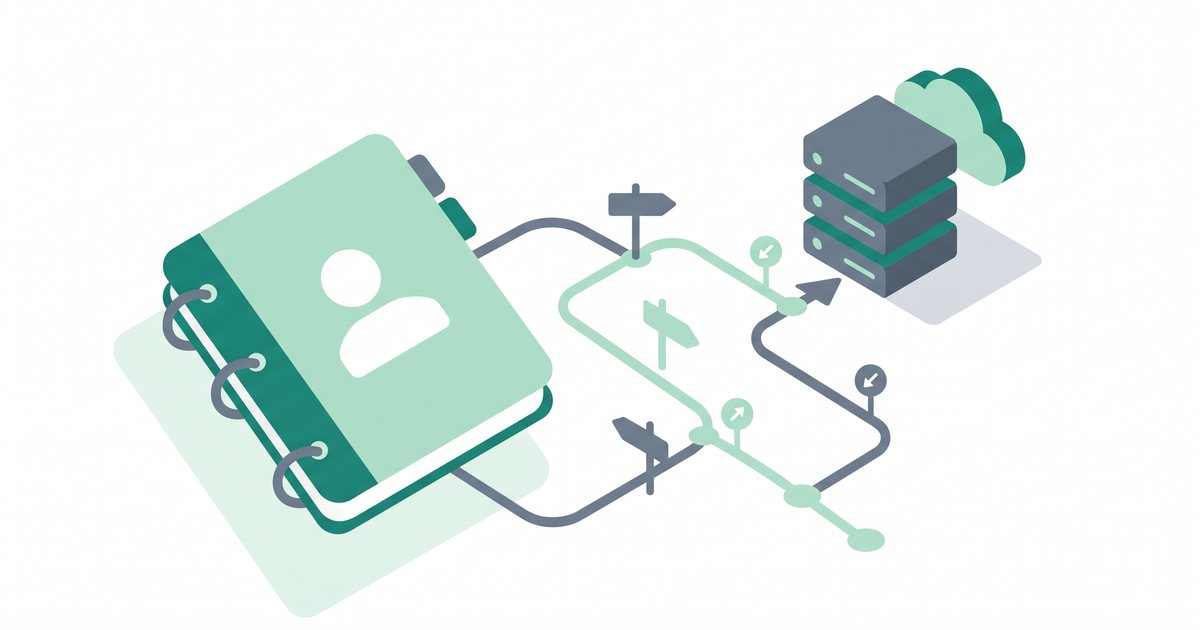
- They are linked by DNS (the internet's address book), which tells your domain which server to send visitors to.
Disclosure: Some links on this page are affiliate links. If you buy through them, we may earn a commission at no extra cost to you. We only recommend products we believe genuinely help with the topic this page covers. Our guidance stays the same whether or not a link earns anything.
The short answer, with a simple analogy
The easiest way to understand the difference is to picture a physical business. Your domain name is the street address of your shop, like "123 Main Street." It is also a bit like a phone number: a short, memorable label people use to reach you. It does not hold anything itself, it just tells people where to go.
Your web hosting is the land and the house that sit at that address. It is the actual building where your products, shelves, and staff live. In website terms, hosting is a server (a powerful, always-on computer) that stores your website's files, images, and pages and hands them to anyone who visits.
So the address (domain) points people to the building (hosting), and the building holds everything they came to see. An address with no building leads nowhere. A building with no address is hard for anyone to find. That is why, in almost every case, you need both to run a live website.
What is a domain name?
A domain name is the human-friendly name people type into a browser to reach your website, such as yourbusiness.com. It exists because the real address of a server is a string of numbers called an IP address (for example, 192.0.2.10). Numbers are hard to remember, so domains give servers a name people can actually recall and share.
You do not buy a domain outright. You register it, which means you rent the exclusive right to use it for a period of time, usually one year at a time. You do this through a registrar — a company approved to sell and manage domain names. You then renew the registration each year to keep it. If you stop renewing, the domain becomes available for someone else to take.
Two behind-the-scenes systems make a domain actually work:
- DNS (Domain Name System): the internet's address book. It translates your easy-to-read domain into the numeric IP address of the server your site lives on.
- Nameservers: the specific servers that hold your domain's DNS records and answer the question, "Where should visitors for this domain be sent?" When you connect a domain to a host, you are usually updating these nameservers.
In short, a domain is the name and the signpost. On its own, it does not store any web pages — it simply points visitors toward wherever your files are kept.
What is web hosting?
Web hosting is the server space that stores your website's files and delivers them to visitors' browsers. When someone opens your site, their browser asks your host for the pages, and the host sends them back so they appear on screen. Because visitors can arrive at any hour, the server needs to stay switched on and connected to the internet around the clock.
A hosting provider is the company that rents you that server space and keeps the hardware running, secure, and online. Your website files — the text, images, code, and settings that make up your pages — are copied onto the host's server, and the host serves them to the world on request.
There are several kinds of hosting suited to different needs and budgets, from shared plans for small sites to more powerful setups for busy ones. If you want the full picture of how hosting works and which type fits you, see our guide to what web hosting is and our overview of the types of web hosting.
Quick way to remember it: the domain is the name people type; the host is the computer that answers when they do.
How a domain and hosting work together
A domain and hosting are separate pieces that team up every time someone visits your site. Here is what happens, step by step, in the moment a visitor loads your page:
- The visitor types your domain (for example,
yourbusiness.com) into their browser and presses enter.
- DNS looks up where the domain points. The browser asks the Domain Name System which server this domain belongs to, using the domain's nameservers to find the correct IP address.
- The request reaches your hosting server. Now that the browser knows the server's address, it sends the request straight to your host.
- The server sends your website back. Your hosting server gathers the right files and returns your web page, which the visitor's browser then displays.
This whole handoff usually finishes in a fraction of a second. The key idea is that the domain directs traffic, while the host delivers the actual website. Both jobs have to happen for a visitor to see your pages.
Do you need both? Can you buy them separately?
Yes, you almost always need both for a normal public website. Hosting without a domain means your site can only be reached by a raw IP address or a plain default link, which is not something you would hand to customers. A domain without hosting means the name works, but there are no pages behind it for visitors to load.
You have two main ways to get them:
- From the same company (simplest): Many hosting providers also sell domains, and some include a free domain for the first year with a hosting plan. When both live in one account, the provider usually connects them for you, so there is no manual setup.
- From separate companies: You can register your domain at one company and buy hosting from another. This is common and works fine — you just connect the two yourself by updating the domain's nameservers (or DNS records) to point at your host. Your host gives you the exact values to enter, and the change can take anywhere from a few minutes to a day to take full effect.
Neither approach is wrong. Buying together is easier for beginners; buying separately gives you flexibility to move your site to a new host later without changing your domain. If you are still deciding, our guide on how to choose web hosting walks through what to weigh up.
Domain vs hosting at a glance
Here is a side-by-side comparison of the two, so the difference stays clear:
Domain vs hosting: a quick comparison
| |
Domain |
Web hosting |
| What it is |
Your website's name and address (e.g. yourbusiness.com) |
Server space that stores your website's files |
| What it does |
Points visitors to the right server, via DNS |
Stores your files and serves your pages to visitors |
| Where you buy it |
A domain registrar (many hosts sell domains too) |
A hosting provider |
| Renewal |
Usually renewed once a year |
Usually paid monthly or yearly |
| Analogy |
The street address or phone number |
The land and house at that address |
On pricing, a common domain extension such as .com is often around $10 to $20 a year, while shared hosting frequently starts at just a few dollars a month. These are general ranges only, and rates change often, so verify current pricing directly with the registrar or host before you buy.
Common mistakes to avoid
Watch out: letting a domain expire is one of the most costly slip-ups. Once it lapses, your site can go dark, your email tied to that name can stop working, and someone else may register the name. Turn on auto-renew and keep a valid card on file.
A few misunderstandings trip up almost every beginner:
- Thinking a domain alone gives you a website. Registering a name does not create any pages. Until you add hosting and build your site, the domain has nothing to show.
- Buying hosting but forgetting a domain. Hosting gives you the space, but without a domain your visitors have no friendly address to type. You end up with a home that has no sign on the door.
- Letting a domain expire. Because a domain is renewed only once a year, it is easy to forget. A missed renewal can take your whole site offline until you recover the name — if it is still available.
- Getting confused when the domain and host are at different companies. If your name is with one company and your site is with another, they will not connect on their own. You have to point the domain at the host by updating its nameservers or DNS records. Skipping this step is why many new sites "don't show up."
Frequently asked questions
What's the difference between a domain and hosting?
A domain is your website's address — the name people type, like yourbusiness.com. Hosting is the server space where your website's files are stored and served from. The domain points visitors to your site; hosting is where the site actually lives. They do two different jobs and normally work together.
Do I need both a domain and hosting?
For a normal public website, yes. You need hosting to store and serve your pages, and a domain to give people a memorable address to reach them. Without a domain, visitors have no easy name to type; without hosting, there are no pages behind that name to load.
Can I buy a domain and hosting from different companies?
Yes. It is common to register a domain at one company and buy hosting from another. You simply connect them by updating the domain's nameservers or DNS records to point at your host. Your hosting provider gives you the exact values to enter, and the change usually takes effect within a few minutes to a day.
Can I have a domain without hosting, or hosting without a domain?
You can, but neither gives you a finished public site on its own. A domain without hosting is a reserved name with no pages behind it — some people park a name this way before building a site. Hosting without a domain works, but visitors can only reach it by a raw IP address or a plain default link, which is not practical for customers.
How do I connect a domain to my hosting?
If both are with the same company, it is usually done for you automatically. If they are separate, log in to your registrar and change the domain's nameservers to the ones your host provides, or update its DNS records to point at your host's IP address. After you save, allow up to a day for the change to spread across the internet.
How much do a domain and hosting cost?
As a general guide, a common domain such as a .com is often around $10 to $20 a year, and shared hosting frequently starts at a few dollars a month. Prices vary widely by provider, plan, and any first-year discounts, so always verify current pricing before you commit.
What happens if my domain expires?
If your domain expires, your website and any email using that name can stop working, and after a grace period the name can be registered by someone else. To avoid this, keep auto-renew switched on and make sure your payment details are current.
Summary
A domain and hosting are two separate pieces that work as a team. The domain is your website's address, the friendly name people type to find you. The hosting is the land and house behind that address — the server that stores your files and serves your pages. DNS links the two, sending each visitor from your domain to the right server. For a live website, you almost always need both, and you can get them from one company or connect two separately.
Next, if you are ready to pick a plan with confidence, read our step-by-step guide on how to choose web hosting. Planning a WordPress site? Our WordPress hosting guide covers what to look for.
If you are just starting out, buying your domain and hosting from one provider is the simplest path. With both in a single account, the provider connects them for you, so there is no manual DNS pointing or nameserver editing to get wrong. Many hosts also include a free domain for the first year with a hosting plan, which keeps early costs down.
As one example, Hostinger offers domains and hosting together, so beginners can get both in one place and skip the setup steps. Compare its plans against your needs to see whether it is a good fit for you.
If valid at the time of purchase, new users may also be able to apply a coupon such as SPECIAL15 or SPECIAL10, subject to Hostinger's terms.
Compare Hostinger plans →
Affiliate disclosure: if you sign up through this link we may earn a commission, at no extra cost to you. How this works.
When buying both together isn't the right call. Keeping a domain and hosting under one account is convenient, but it is not required, and some owners deliberately separate them so a billing dispute or outage with one provider cannot affect both at once. Registrars such as Cloudflare Registrar or Porkbun sell domains at or near cost with no upsell. And if you only need a domain — to reserve a name, protect a brand, or point at a service you already use — you do not need a hosting plan at all. Buy hosting when you actually have something to host.